Datas : de 13 de Junho a 30 de Agosto de 2026
Visitação: de terça a domingo, das 10h às 17h (permanência até às 18h)
Sobre a exposição
Por meio do futebol, a exposição aproxima arte urbana, ancestralidade e experiências compartilhadas entre Brasil e Benim
São Paulo, junho de 2026 – Tendo o futebol como ponto de partida para refletir sobre cultura, memória e pertencimento, o Museu Afro Brasil Emanoel Araujo, instituição da Secretaria da Cultura, Economia e Indústria Criativas do Estado de São Paulo, com gestão da Associação Museu Afro Brasil – Organização Social de Cultura (AMAB), apresenta a exposição “Ginga – A celebração do Futebol na Arte Afro-Atlântica”.
A mostra reúne obras do artista beninense Aston e intervenções inéditas das artistas brasileiras NeneSurreal e Mariana Calle, estabelecendo diálogos entre arte contemporânea, cultura urbana e experiências compartilhadas em diferentes territórios afro-atlânticos.
Realizada pelo Núcleo de Curadoria do Museu Afro Brasil Emanoel Araujo, a mostra toma como ponto de partida o conceito de ginga, associado ao movimento, à habilidade e à criação. Presente em diferentes manifestações culturais afro-brasileiras, a ginga é apresentada como uma forma de inteligência corporal baseada no improviso, na adaptação e na construção de novas possibilidades diante dos desafios do cotidiano
A exposição aborda o futebol como uma linguagem compartilhada capaz de articular práticas sociais, imaginários coletivos e processos históricos que atravessam fronteiras geográficas. Nesse contexto, o esporte é compreendido como espaço de encontro, pertencimento e construção de vínculos entre comunidades negras em diferentes partes do mundo.
“Ginga parte do futebol como uma experiência que atravessa territórios, gerações e culturas. A exposição reúne diferentes linguagens artísticas para refletir sobre os vínculos históricos e contemporâneos que conectam comunidades negras em distintos contextos da diáspora africana. Ao aproximar arte, memória, ancestralidade e cultura urbana, a mostra convida o público a olhar para o futebol como um espaço de encontro, criação e construção de pertencimentos”, afirma Vera Nunes, superintendente artística do Museu Afro Brasil Emanoel Araujo.
A mostra também apresenta intervenções inéditas das artistas NeneSurreal e Mariana Calle, duas importantes representantes da arte urbana contemporânea brasileira. Mulheres negras, com trajetórias construídas no espaço público e forte conexão com os territórios periféricos, as artistas incorporam à exposição perspectivas que relacionam futebol, memória, identidade, território e pertencimento.
Desenvolvidas especialmente para Ginga, os murais ampliam o olhar sobre o esporte ao destacar experiências coletivas, afetos comunitários e formas de convivência construídas em diferentes contextos urbanos. Em vez de focalizar apenas o jogo, as obras abordam aquilo que acontece ao seu redor: os encontros entre vizinhos, a ocupação das ruas, as celebrações populares e os vínculos que se formam em torno da cultura do futebol.
Completando este encontro de forças, a exposição acolhe as icônicas bonecas Abayomis da artista e sacerdotisa Mãe Detinha de Xangô. Essas peças, carregadas de afeto, proteção e da força da mulher negra, ganham um significado ainda mais profundo ao revelarmos que foram presentes dados a Emanoel Araujo e hoje integram o acervo do museu. As Abayomis, feitas de pano e desprovidas de costura, são símbolos de resistência e sabedoria ancestral, materializando uma “pedagogia do sensível”, na qual o fazer artístico é indissociável do cuidar, do lembrar e do regenerar mundos. Elas representam a confluência do sagrado e do estético, enriquecendo a “cosmologia da presença” que a exposição busca evocar.
Serviço
“Ginga – A celebração do Futebol na Arte Afro-Atlântica”
Em cartaz até o dia 02/08/2026
Museu Afro Brasil Emanoel Araujo Parque Ibirapuera, Portão 10 – Av. Pedro Álvares Cabral, s/nº – São Paulo (SP)
Horário de funcionamento: Terça-feira a domingo, das 10h às 17h (permanência até 18h)
Ingressos: R$ 15 (inteira) e R$ 7,50 (meia-entrada) Gratuito às quartas-feiras Informações: www.museuafrobrasil.org.br
Sobre o Museu Afro Brasil Emanoel Araujo
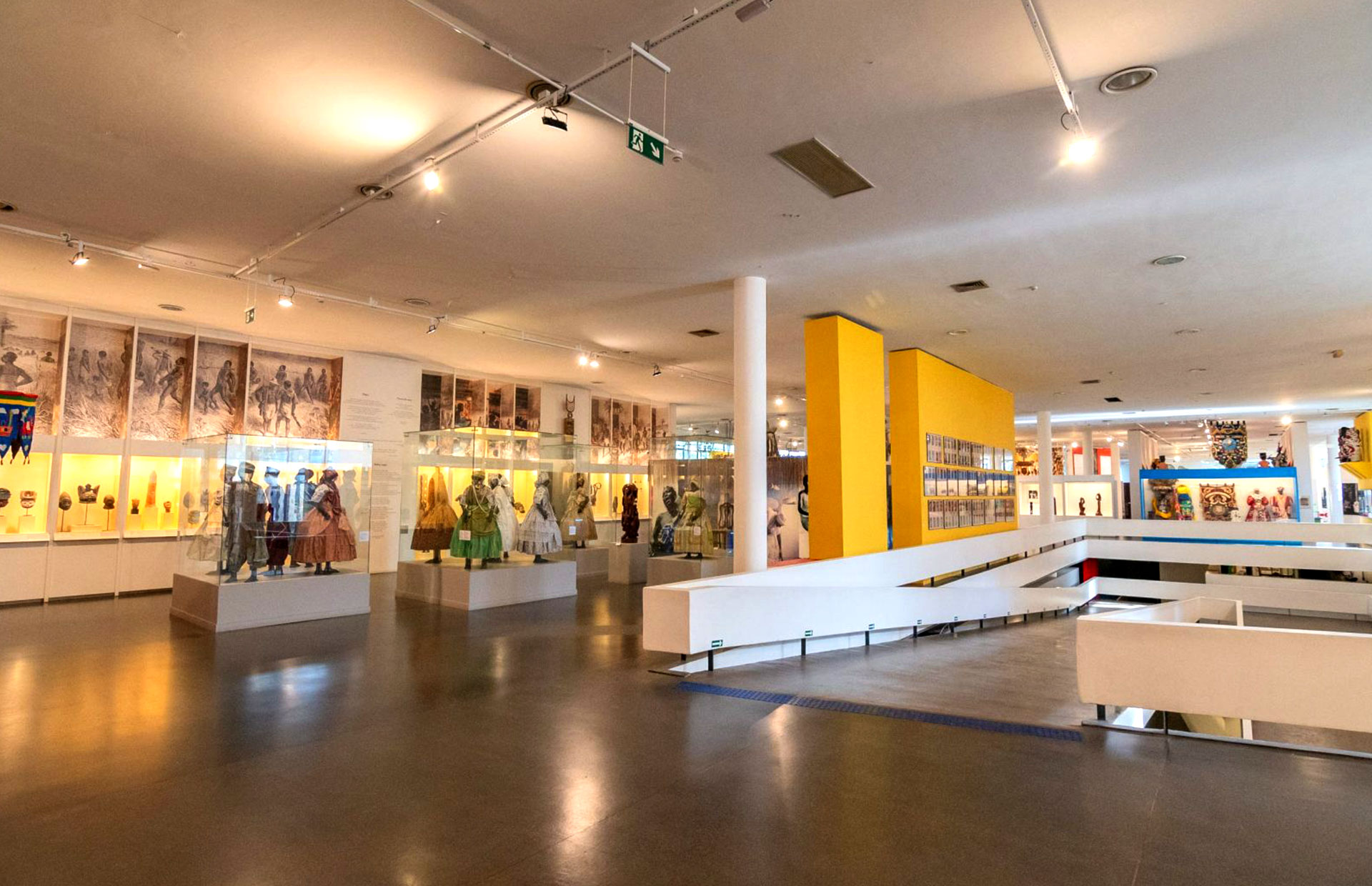
O Museu Afro Brasil Emanoel Araujo é uma instituição da Secretaria da Cultura, Economia e Indústria Criativas do Estado de São Paulo administrada pela Associação Museu Afro Brasil – Organização Social de Cultura. Inaugurado em 2004, a partir da coleção particular do seu fundador, Emanoel Araujo (1940-2022), o museu é um espaço de história, memória e arte. Localizado no Pavilhão Padre Manoel da Nóbrega, dentro do mais famoso parque de São Paulo, o Parque Ibirapuera, o Museu Afro Brasil Emanoel Araujo conserva, em cerca de 12 mil m², um acervo museológico com mais de 8 mil obras, apresentando diversos aspectos dos universos culturais africanos e afro-brasileiro e abordando temas como religiosidade, arte e história, a partir das contribuições da população negra para a construção da sociedade brasileira e da cultura nacional. O museu exibe parte deste acervo na exposição de longa duração e realiza exposições temporárias.
About The Exhibition
Through football, the exhibition brings together urban art, ancestry, and shared experiences between Brazil and Benin
São Paulo, June 2026 – Using football as a starting point for reflecting on culture, memory, and belonging, the Museu Afro Brasil Emanoel Araujo, an institution of the São Paulo State Secretariat for Culture, Economy and Creative Industries, managed by the Associação Museu Afro Brasil – Organização Social de Cultura (AMAB), presents the exhibition “Ginga – Celebrating Football in Afro-Atlantic Art.”
The exhibition features works by Beninese artist Aston, alongside newly commissioned interventions by Brazilian artists NeneSurreal and Mariana Calle, creating dialogues between contemporary art, urban culture, and shared experiences across different Afro-Atlantic territories.
Curated by the Curatorial Department of the Museu Afro Brasil Emanoel Araujo, the exhibition takes as its point of departure the concept of ginga—a term associated with movement, skill, and creativity. Present in various Afro-Brazilian cultural expressions, ginga is presented as a form of embodied intelligence grounded in improvisation, adaptability, and the ability to create new possibilities in the face of everyday challenges.
The exhibition explores football as a shared language capable of articulating social practices, collective imaginaries, and historical processes that transcend geographical borders. In this context, the sport is understood as a space of encounter, belonging, and the creation of bonds among Black communities in different parts of the world.
“Ginga begins with football as an experience that crosses territories, generations, and cultures. The exhibition brings together different artistic languages to reflect on the historical and contemporary ties that connect Black communities across diverse contexts of the African diaspora. By bringing together art, memory, ancestry, and urban culture, the exhibition invites visitors to see football as a space for encounter, creativity, and the construction of belonging,” says Vera Nunes, Artistic Superintendent of the Museu Afro Brasil Emanoel Araujo.
The exhibition also presents newly commissioned interventions by NeneSurreal and Mariana Calle, two prominent figures in contemporary Brazilian urban art. As Black women whose artistic trajectories have been shaped in public spaces and through strong connections with peripheral communities, the artists bring perspectives that relate football to memory, identity, territory, and belonging.
Created specifically for Ginga, the murals broaden the understanding of sport by highlighting collective experiences, community bonds, and forms of coexistence developed in diverse urban contexts. Rather than focusing solely on the game itself, the works address what happens around it: neighbors gathering, the occupation of public spaces, popular celebrations, and the relationships built through football culture.
Completing this powerful convergence, the exhibition features the iconic Abayomi dolls by artist and priestess Mãe Detinha de Xangô. Filled with affection, protection, and the strength of Black womanhood, these pieces acquire even deeper significance through the revelation that they were gifts presented to Emanoel Araujo and are now part of the museum’s permanent collection. Handmade from fabric and sewn without stitches, the Abayomi dolls symbolize resilience and ancestral wisdom, embodying a “pedagogy of the senses” in which artistic creation is inseparable from care, remembrance, and the regeneration of worlds. They represent the convergence of the sacred and the aesthetic, enriching the “cosmology of presence” that the exhibition seeks to evoke.
Service
“Ginga – Celebrating Football in Afro-Atlantic Art”
On view through 02/08/2026
Museu Afro Brasil Emanoel Araujo Ibirapuera Park, Gate 10 – Av. Pedro Álvares Cabral, s/nº – São Paulo (SP)
Openning Hours: Tuesday to Sunday, 10:00 a.m. – 5:00 p.m. (visitors may remain until 6:00 p.m.)
Admission: R$ 15 (full price) e R$ 7,50 (reduced admission)
Free admission on Wednesdays
Informações: www.museuafrobrasil.org.br
About the Museu Afro Brasil Emanoel Araujo
The Museu Afro Brasil Emanoel Araujo is an institution of the São Paulo State Secretariat for Culture, Economy and Creative Industries, managed by the Associação Museu Afro Brasil – Organização Social de Cultura. Founded in 2004 from the private collection of its founder, Emanoel Araujo (1940–2022), the museum is dedicated to history, memory, and art.
Located in the Padre Manoel da Nóbrega Pavilion, within São Paulo’s iconic Ibirapuera Park, the museum occupies approximately 12,000 square meters and houses a collection of more than 8,000 works of art. Its holdings present the richness and diversity of African and Afro-Brazilian cultural worlds, exploring themes such as religion, art, and history while highlighting the fundamental contributions of Black people to the formation of Brazilian society and national culture.
The museum displays part of its collection in its permanent exhibition and regularly presents temporary exhibitions that expand and deepen discussions on Afro-Brazilian and African artistic and cultural production.